DISCOVER

Invisible orthodontics

And he is smiling again in a totally predictable, controlled, but most importantly, imperceptible way.

INVISIBLE

You can finally wear braces without anyone noticing.

CONTROLLED

You will be supervised periodically to make sure everything is running smoothly

PREDICTABLE

The end result is the 3D virtual blueprint on which the templates are modeled

Would you like to realign your teeth and smile freely again, but the thought of braces blocks you?
Do you feel uncomfortable smiling because of your dental misalignment or struggling in the presence of other people?

When you look in the mirror, would you like to see straight, well-aligned teeth, but the thought of having to wear classic fixed braces upsets you?

I know exactly what it means what you are feeling, because that is exactly what they feel and what my patients also tell me on their first visit.

When they sit down and start talking to me, I read it in their eyes how “unfit” they feel in certain contexts, “messy,” “unsafe” because of their dental situation.

Yet, some of them, as long as they do not put the classic fixed braces in their mouths, prefer to live with this state of mind and a mouth full of misaligned teeth, which in the long run, due to proper dental hygiene, will inevitably lead to the onset of serious diseases.

“Doctor, but isn’t there a possibility of realigning teeth without resorting to classic braces?”

The answer is “YES”

Precisely in order to also meet the aesthetic needs of our clients and make them feel, at any time, comfortable, here in Kravos & Guadagno practice, we adopt invisible orthodontic systems, that is, ones that can realign your smile gradually and wear masks without anyone being aware of it.
What is invisible orthodontics

The various invisible dental options that exist can be divided into two families: fixed braces and removable braces.

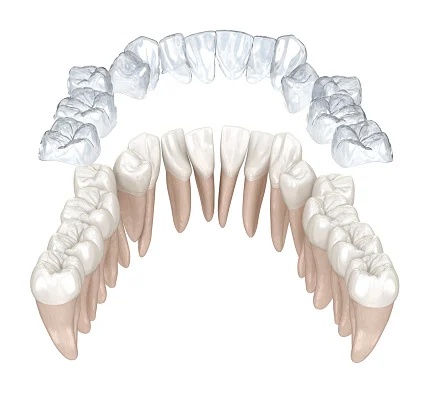
Invisible orthodontics, as the name itself suggests, includes all those orthodontic treatments whose main goal is to be discreet is part of cosmetic orthodontics and through the use of internal appliances or thin transparent templates progressively aligns the teeth in a totally aesthetic manner. This allows people to continue living their daily lives without any discomfort. Invisible to others, comfortable for the patient.

Fixed lingual braces that are the ideal solution to aesthetic problems for adult patients with busy professional and social lives who require maximum aesthetics and efficiency. Lingual appliance (placed on the inner side of the teeth) not visible from the outside, it is completely individualized created tailored to your teeth, so as not to create any discomfort and discomfort and giving you maximum comfort and effectiveness.

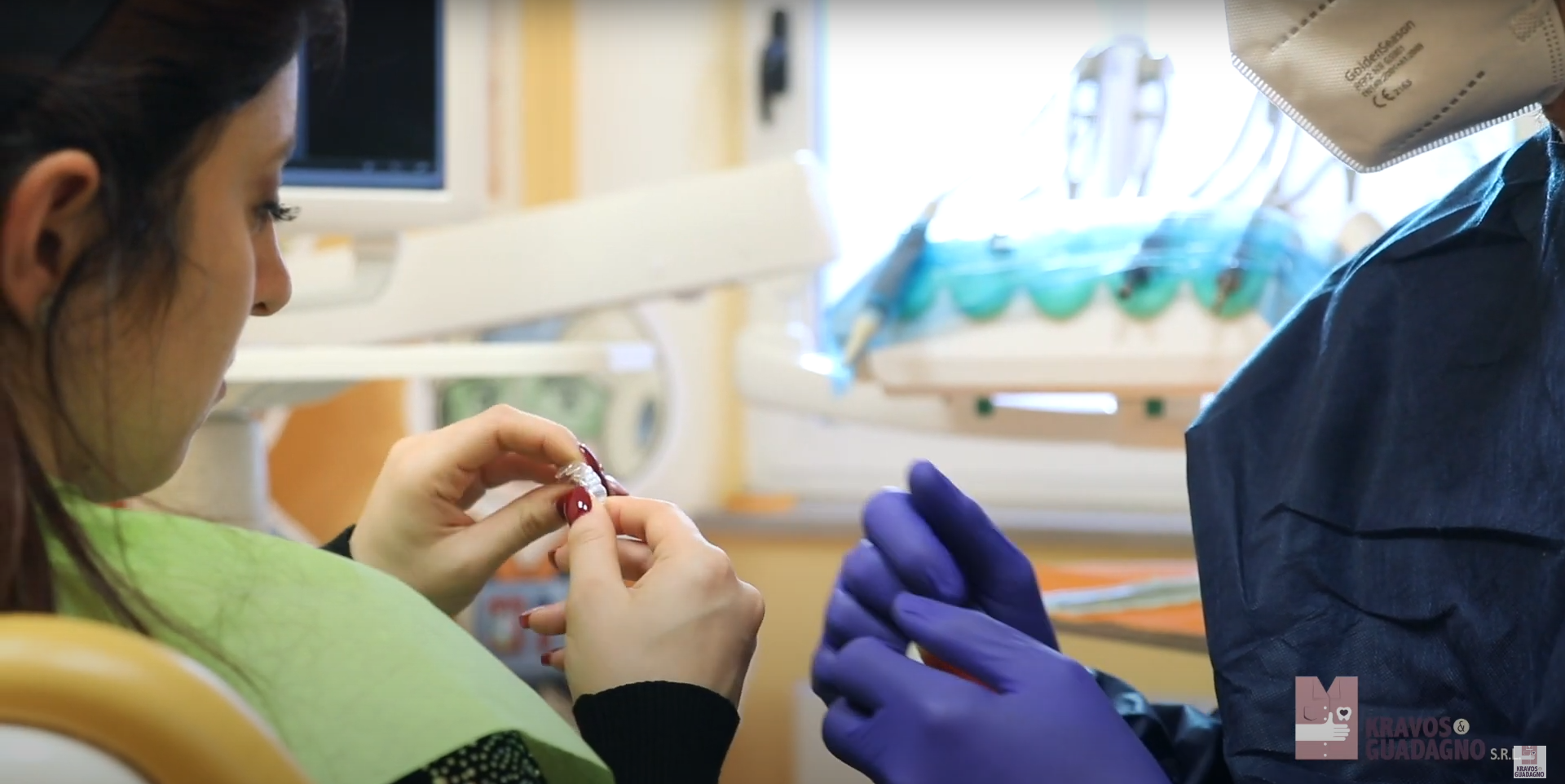
  • Removable braces transparent templates Invisalign method, invisible orthodontics that can be performed on adults and children as young as 8 years old involves the use of transparent templates applied sequentially that result in a progressive alignment of misplaced teeth. Because they are removable, they allow the patient ease of use. Removed during meals, they allow the maintenance of optimal hygiene.

In order to work with Incognito braces, the orthodontist has undergone ad hoc training so as to acquire the necessary skills to operate this system in the best possible way.

Health starting with your mouth

What it consists of

Nearly imperceptible and comfortable braces allow you to align your teeth without anyone noticing.

It is a distinctly aesthetic method, and the treatment will give you a perfect smile without aesthetic discomfort and will not compromise your normal everyday life.

Again, the orthodontist has undergone ad hoc training so as to acquire the necessary skills to operate this system in the best possible way.

Thanks to invisible orthodontics systems, you will not only regain the pleasure of smiling peacefully, but you will get amazing results month after month. Do you want to know the best invisible solution for you?
Our expert

I am Dr. Alessandro Rossi, a specialist in orthognathic orthodontics, and I collaborate with the Kravos & Guadagno practice in Trieste.

I graduated in Dentistry and Dental Prosthetics from the University of Padua in 2013. I subsequently attended the Second-Level University Master’s program in Orthognathic Orthodontics at the University of Rome Tor Vergata.

In 2017, I obtained my Specialization Diploma in Orthognathic Orthodontics from the University of Trieste, where I am currently a clinical tutor and adjunct professor at this specialty school.

I practice privately in dental clinics in Veneto and Friuli-Venezia Giulia as an orthodontic consultant. I consider myself a precise professional, attentive to the needs of my patients. Curiosity drives me to constantly pursue professional development, and ambition motivates me to achieve the highest levels of excellence in my clinical practice.

Orthodontist – specialist in Orthognathic Orthodontics

Laurea in Odontoiatria e Protesi Dentaria – Università di Padova (2013).…

Prenota la tua prima visita

Book your first visit

Fill out the form below and book your free first visit at Kravos & Guadagno's Trieste office now. We are waiting for you.


    Fields indicated with (*) are required. This site is protected by reCAPTCHA and Google’s Privacy Policy and Terms of Service apply.

    Frequently asked questions

    Can you play sports if you wear orthodontic braces?
    Yes without any limitations. For some types of higher-contact sports such as karate or boxing, our recommendation is to safeguard your smile by wearing the appropriate protection: mouth guards. There are mouth guards that are appropriate for whatever type of apparatus and treatment you are doing, are comfortable, and come in a wide range of colors and patterns.
    How long will my child's orthodontic treatment last?
    The duration of treatment varies from case to case; there is no equal duration for every patient. On average, an orthodontic treatment duration ranges from 6 months for the simplest cases to 2 years for the most complex cases. The duration of treatment can be affected by the rate of growth, the starting situation, and the severity of malocclusions, and much also depends on the patient's willingness to follow the instructions given, maintain good oral hygiene, and show up regularly for checkups.
    Once the teeth are aligned is it for life?
    Well-done orthodontic treatment is always followed by a period of restraint. The goal of the restraint phase is to maintain the results of orthodontic treatment so that the teeth always remain aligned. The retention phase is normally considered for life. After many months of braces, what we want for your new smile is to make it last. Teeth can always shift even after wearing braces; you could say they retain some memory and tend to return to their original position. For this reason, we offer braces that should only be worn at night. If braces are not worn, the probability of your teeth shifting is very high.
    Can braces cause tooth decay?
    Fixed orthodontic braces, facilitate food stagnation, make habitual home hygiene more difficult, but in themselves do not cause tooth decay. But neglecting one's oral hygiene during orthodontic treatment could be a serious detriment to dental health, which is why it is important to devote the right amount of time to it by scrupulously following the hygiene instructions given by the orthodontist and hygienist during the course of treatment, thus eliminating any danger of caries or gum inflammation. It happens that in the presence of children or adolescents uncooperative about hygiene, it is preferred to postpone orthodontic treatment for a few months until, with appropriate lessons on the importance of proper hygiene, reassuring home hygiene has been achieved.
    Can adults also undergo orthodontic treatment?
    Yes!!! in the absence of acute pathology in the osseo-gingival support tissues, it is possible to align teeth at any age. It is a common misconception that orthodontic appliances are only for children and adolescents. In reality, all patients can undergo orthodontic therapy, as adulthood is not a contraindication to such treatment. In recent years , orthodontics is increasingly specializing in the treatment of adults with aesthetic and invisible appliances.
    Is orthodontic treatment painful?
    And the question that everyone asks, In general, the patient does not feel any discomfort while in our practice, however, some discomfort may be experienced the days following the application of braces or their activation. These are minor irritations of the mucous membrane that goes against the protruding parts of the appliance and tooth sensitivitySometimes a slight spontaneous dental soreness intervenes and upon chewing. Within a short time the discomfort goes away until it disappears.
    What can I eat and what will I have to avoid with braces?
    One can certainly feed oneself freely and fully even while wearing orthodontic braces, however, by following some simple rules of precaution. Some practical tips: avoid extremely hard foods that can damage braces and extremely sticky foods such as sweets that can stick together negatively affecting hygiene. Also to be absolutely avoided are some bad habits such as gnawing your pencil while studying or the bad habit of biting your nails.
    Is there cosmetic orthodontics for my case?
    The adult and teenager often ask me to perform orthodontic treatment as aesthetically as possible. Now in modern orthodontics there are two solutions: The first consisting application of the fixed appliance no longer on the outside but rather on the inside of the teeth in the posterior part that is not visible The second born in recent years are the so-called "invisible masks," transparent mobile braces that can be used to align the teeth. The choice between the two methods depends on the initial situation, so following a specialist visit, it will be the orthodontist who will direct you between the possible solutions, motivating their pros and cons.
    At what age to start orthodontic treatment?
    The first orthodontic visit can be planned as early as around the age of 5/6 years as some skeletal-dental malocclusions can already be treated with interceptive orthodontics or when there should be no reason for such early treatment, just schedule regular growth checks and then intervene at the best time.So: an early visit is always advisable as in any medical branch. Sometimes it becomes the scheduling of treatment but often it is just a reassuring checkup.